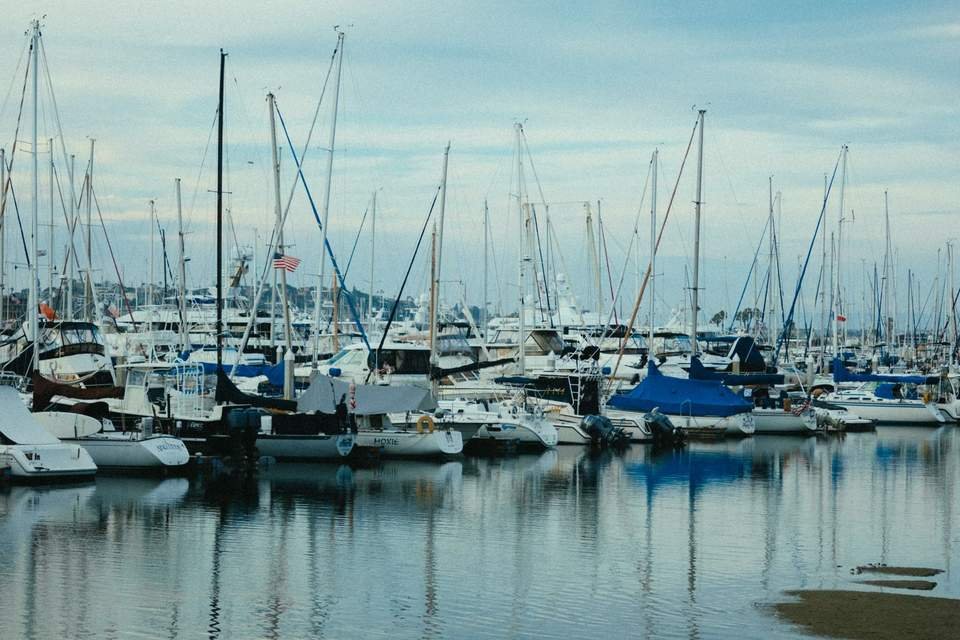
Docking scares a lot of new owners. Wind pushes you around, current grabs the bow, the slips are tight, and it can feel like half the marina is watching. Discover Boating, the consumer program of the National Marine Manufacturers Association (NMMA), says docking isn't rocket science. Mostly it comes down to basic safety habits, taking your time and not letting the pressure get to you. In their words, wind, current and momentum control everything. Get those three under control and you'll dock like you've done it for decades.
This guide walks through why docking feels hard, how to prepare, a step-by-step approach, how to adjust for wind and current from different directions, the mistakes that cause most trouble, and the safety rules that should become automatic.
Why docking is tricky
- No brakes. A boat keeps moving after you stop pushing it. Momentum carries you toward the dock whether you're ready or not.
- Wind. The topsides and any canvas catch wind like a sail. A crosswind can swing the stern around just as you try to slide in parallel. Discover Boating calls a following wind the worst case, because it pushes you into the dock faster than you want to go.
- Current. Moving water is always trying to push you off course. Watch how floating debris moves to see which way it's flowing and how fast.
- Tight marinas. Slips are packed close together, which leaves very little room for error.
- An audience. People watching from their cockpits add pressure fast. Remember that everyone has been the entertainment at some point.
Prepare early
Get ready well before you reach the dock, so you aren't digging for dock lines at the last minute. Discover Boating's advice is to prep early and always come in slow. Its pre-docking checklist:
- Hang fenders on the docking side at the boat's widest points.
- Get dock lines out and coil them so they run out cleanly.
- Give each crew member a job, such as one person on the bow line and one on the stern line.
- Slow down well before the approach.
- Check the wind direction and current.
Discover Boating's golden rule is to never approach a dock faster than you're willing to hit it. At low speed you have time to react and to make small corrections.
Step by step
1. Plan the approach
Look over the docking area first. Watch for boats moving nearby, check flags for wind direction, and see how the current is carrying debris. Then come in at a controlled speed, barely above idle, with just enough power to keep steering. Think about how wind and current will act on your boat, since every boat handles differently.
2. Make contact
Use short shifts between forward, neutral and reverse to make small adjustments. Discover Boating warns against steering with the throttle, because that's how you end up going too fast. Small gear changes give you more precise control. Glide slowly through the final approach. You want just enough speed to keep control, and slow enough that touching the dock won't damage anything. Set your angle for the conditions. With wind on the bow, approach at a sharper angle.
3. Secure the boat
Discover Boating's line sequence:
- Get the bow and stern lines on first. They stop the boat from drifting away.
- Add spring lines if you're staying a while.
- In a slip, cross the stern lines to stop the boat from moving forward and back.
Then shut down. Step off carefully once the boat is secure enough, and toss lines to someone on the dock when you can rather than jumping off with them.
Adjusting for wind and current
How you approach depends on the conditions. Discover Boating covers three common cases:
- Wind and current on the bow. This is the easiest case, because wind and current act as brakes. Approach at a steeper angle and turn parallel at the last moment.
- Wind and current from astern. These push you toward the dock faster than you want. Approach more parallel and use reverse often to control speed. Don't be afraid of a burst of reverse if you're coming in too fast.
- Wind and current from the side. These push the boat sideways while you move forward. Aim the bow upwind of where you want to end up and let the wind set you down onto the spot.
Hull shape matters too. Discover Boating notes that a pontoon boat catches wind differently than a deep-V hull. What works on your neighbor's boat may not work on yours.
The big four mistakes
Discover Boating lists four mistakes that even experienced boaters make, especially when conditions get tough:
- Overcorrecting. Overreacting to a little drift turns a small problem into a big one.
- Coming in too fast. Speed makes every other mistake worse. You have less time to react, and any mistake does more damage.
- Steering with the throttle instead of the helm. Learn to use momentum and let the boat glide.
- Poor preparation. Not having lines ready creates stress at the worst moment.
The quick fix is to take care of the easy part, preparation, before you start the approach.
Safety rules that should be automatic
No docking maneuver is worth an injury or a damaged boat. Discover Boating's non-negotiable rules:
- Keep hands and feet inside the boat during the approach.
- Don't jump onto the dock with lines in your hands.
- Give the crew simple, specific instructions.
- Have an exit plan. Know how you'll abort and circle around.
- Never use your body to fend off. That's what fenders are for.
If things go wrong, put the boat in reverse, back away safely and try again. Backing out and taking another run is normal seamanship.
Practice
Confidence comes from repetition and from learning how your own boat behaves. Start in calm conditions and work up to harder situations. Don't rush the learning, since even experienced boaters take their time when conditions are bad. Once you understand how wind and current act on your boat, docking becomes routine instead of stressful. And most boaters on the dock are happy to help if you ask.
Related costs
If you're budgeting for a slip, enter slip or storage costs in the True Cost tool.
Sources
- Wind/current/momentum, no brakes, crosswind and following wind, tight marinas, pre-docking checklist, golden rule, three-step approach and line sequence, wind/current scenarios, pontoon vs deep-V, big four mistakes, safety rules, emergency protocol, practice: Discover Boating (NMMA), "Boat Dock Safety: Tips and Step-by-Step Guide." https://www.discoverboating.com/resources/docking-a-boat-step-by-step-guide